Patients occasionally seem surprised when a dentist tells them:
“Let’s not treat this right now. Let’s monitor it.”
We live in a world where expertise is often associated with action.
See a problem.
Fix it.
Do something.
But after more than two decades in healthcare, I’ve learnt something that sounds almost contradictory:
Knowing when NOT to intervene can require just as much expertise as knowing how to intervene.
More treatment doesn’t automatically mean better treatment
Modern dentistry gives clinicians extraordinary capabilities.
We can digitally design smiles, replace missing teeth, restore damaged teeth, perform sophisticated surgeries and increasingly use digital tools to make treatment more predictable.
The temptation, therefore, is to assume that because something can be done, it should be done.
Those are two very different questions.
Sometimes an early lesion may need preventive management and monitoring rather than immediate restorative treatment.
Sometimes an old restoration that isn’t aesthetically perfect may still be clinically acceptable.
Sometimes the patient’s concern requires reassurance more than intervention.
And sometimes the best treatment plan is simply:
Let’s watch this carefully.
Dentistry has changed from repair to preservation
Historically, much of dentistry was reactive.
Something broke; we repaired it.
Something hurt; we treated it.
Something couldn’t be saved; we replaced it.
Modern preventive dentistry asks a more sophisticated question:
How much healthy natural tissue can we preserve?
Every irreversible procedure removes or alters something.
That doesn’t make treatment wrong—many procedures are absolutely necessary.
But it does mean intervention should have a clear reason.
At Realtooth, technology helps us make these distinctions more confidently. Digital imaging, intraoral scanning, photographs and other diagnostic tools can allow us to document conditions and monitor changes over time when appropriate.
Technology isn’t valuable because it allows us to perform more dentistry.
It’s valuable when it helps us make better decisions.
This is also a leadership lesson
Interestingly, dentistry has taught me the same lesson about leadership.
Young leaders often feel they must constantly intervene.
Correct.
Change.
Respond.
Solve.
Experienced leaders gradually learn another skill:
Knowing when to leave something alone.
Not every disagreement needs intervention.
Not every process needs immediate redesign.
Not every problem needs the leader to become the solution.
Sometimes observation gives you information that action would have destroyed.
Restraint shouldn’t be confused with indecision.
When backed by knowledge, it can be a sign of confidence.
Patients need recommendations, not transactions
Healthcare becomes dangerous when every consultation starts looking like a sales opportunity.
Patients aren’t customers choosing upgrades.
They’re people trusting professionals with decisions that can affect their bodies for decades.
That trust creates responsibility.
The question should never simply be:
“What can we do?”
It should be:
“What does this person actually need?”
Sometimes the answer is sophisticated treatment.
Sometimes it’s prevention.
Sometimes it’s monitoring.
And occasionally, it’s nothing at all.
Perhaps that’s one of the clearest signs of professional maturity:
Having the ability to do something—and the judgement to know when you shouldn’t.
The Realtooth Perspective
For us, advanced dentistry isn’t defined by how much technology we use or how many procedures we perform. It’s about using expertise and technology to arrive at the most appropriate decision for each patient—including when monitoring is the better option.
Why the Best Doctors Sometimes Recommend No Treatment
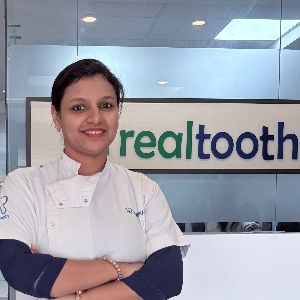
Dr Arpita Anand
Posted on 04-Aug, 2026