I still remember one particular morning in my studio.
There was no grand crisis. No shouting. No dramatic confrontation.
Just silence.
The kind of silence that tells you something isn't right.
A tailor sat quietly at his machine. My assistant was busy making notes. Another team member avoided eye contact. Everyone was working, yet the energy felt heavy. As a business owner, you learn to notice these things long before anyone says a word.
For a moment, I wondered if I should step in as "the boss."
After all, that's what authority does—it reminds people who's in charge.
But experience has taught me something different.
Authority can make people obey.
Respect makes people care.
And there is a world of difference between the two.
When I first started my journey, I believed leadership meant having answers, making decisions and ensuring everyone followed instructions. I thought if I worked hard enough, people would naturally follow.
Reality had other plans.
I realised that people don't always remember what you instructed them to do. They remember how you made them feel.
Did you listen?
Did you acknowledge their effort?
Did you stand beside them when things went wrong?
Or did you only appear when there was a mistake to point out?
Some of the biggest lessons in leadership haven't come from boardrooms or business books. They've come from my own studio floor, surrounded by fabrics, unfinished garments, last-minute client changes and people who, like me, are simply trying to do their best.
I've seen highly skilled people stop giving their best because they felt unheard.
I've also seen an average worker transform simply because someone believed in them.
That someone didn't need authority.
They offered respect.
Respect is a strange thing.
You cannot demand it.
You cannot print it on a visiting card.
You cannot add it to your designation.
It quietly grows through consistency.
It is built every time you keep your word.
Every time you admit you're wrong.
Every time you thank the person whose work often goes unnoticed.
As founders, we sometimes forget that our businesses are built by people before they are built by products.
A beautiful garment doesn't begin with fabric.
It begins with hands.
Hands that cut.
Hands that stitch.
Hands that press.
Hands that package.
When those hands feel respected, they don't just complete a task. They put a little piece of themselves into the work.
That cannot be measured in numbers.
Over the years, I've learnt another important lesson.
Respect isn't weakness.
It doesn't mean saying yes to everything.
It doesn't mean avoiding difficult conversations.
In fact, some of the strongest leaders I've met are also the kindest.
They set boundaries.
They make tough decisions.
But they never forget the human being standing in front of them.
Leadership is not about making people feel small so they recognise your position.
It's about making people feel valued so they recognise their own.
I've met people with impressive titles who struggled to earn genuine loyalty.
I've also met ordinary individuals with no title at all, yet everyone naturally looked to them for guidance.
That's respect.
And respect will always outlast authority.
As I continue building House of Neyha, I don't aspire to create a workplace where people work because they fear disappointing me.
I hope to build one where people give their best because they feel they belong.
Because at the end of the day, garments can be recreated.
Businesses can be rebuilt.
But the way people remember working with you—that stays with them for years.
Perhaps that's the real legacy of leadership.
Not the authority you held.
But the respect you earned.
RESPECT IS BETTER THAN AUTHORITY
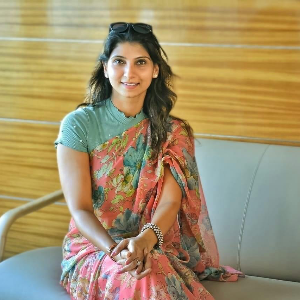
Neha Bhatt
Posted on 27-Jul, 2026