One of the most persistent myths I hear in dentistry is:
“Doctor, I don’t want scaling. Cleaning makes teeth loose.”
It sounds believable because some patients genuinely feel increased mobility or spaces between their teeth after professional cleaning.
But the conclusion is wrong.
Scaling doesn’t make healthy teeth loose. Gum disease does.
So why does this myth survive?
When gum disease progresses, plaque eventually hardens into calculus or tartar around and sometimes below the gum line.
Over time, inflammation can damage the tissues and bone supporting the teeth.
Here’s where things become deceptive.
Large deposits of calculus can occupy spaces around teeth. Meanwhile, swollen gums can hide the true extent of disease.
When these deposits are professionally removed, patients may suddenly notice spaces that weren’t obvious before.
If supporting bone has already been lost, a tooth may also feel more mobile.
The cleaning didn’t create that damage.
It revealed it.
It’s a little like removing scaffolding from a damaged building and blaming the removal for exposing the cracks.
Bleeding gums aren’t normal either
Another sentence dentists hear constantly is:
“My gums always bleed when I brush. That’s normal for me.”
Common? Yes.
Normal? No.
Persistent bleeding while brushing can be a sign of gum inflammation and deserves assessment.
And here’s the uncomfortable part about gum disease:
It can progress with surprisingly little pain.
A patient may therefore assume everything is fine until significant supporting tissue has already been affected.
This is why waiting for pain isn’t a reliable prevention strategy.
Prevention is easier than rebuilding
Modern dentistry can replace missing teeth remarkably well.
We have implants, advanced prosthetics and digital restorative techniques.
But despite all our technology, nothing changes one fundamental principle:
Preserving healthy natural teeth remains preferable whenever possible.
At Realtooth, this is why preventive care and periodontal assessment are part of the larger conversation—not an optional cosmetic add-on.
A cleaning isn’t simply about making teeth look brighter.
It’s about creating an environment where gums and supporting structures can remain healthy.
And if periodontal disease already exists, patients may need more than routine cleaning; treatment depends on its extent.
The larger problem: misinformation changes behaviour
What interests me most about this myth isn’t actually scaling.
It’s how easily misinformation can prevent people from doing something beneficial for their health.
Someone hears a frightening story from a relative.
They avoid treatment.
The disease progresses.
And eventually, the outcome appears to confirm the original myth.
Healthcare professionals therefore have a responsibility beyond treatment.
We have to explain the “why.”
Because information doesn’t merely educate patients.
It changes decisions.
So the next time someone says:
“Cleaning makes teeth loose,”
perhaps the better conversation is:
What was happening underneath the calculus before it was removed?
Sometimes treatment doesn’t create the problem.
It simply reveals a problem that had been quietly developing all along.
The Realtooth Perspective
Good preventive dentistry isn’t about doing more procedures. It’s about identifying disease earlier, explaining it clearly and helping patients preserve what nature gave them for as long as possible.
A Cleaning Makes Teeth Loose, No. It Reveals What Was Already Happening
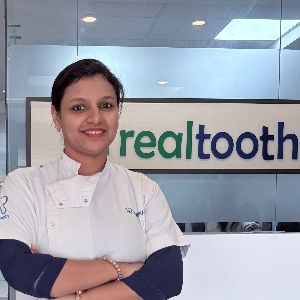
Dr Arpita Anand
Posted on 04-Aug, 2026